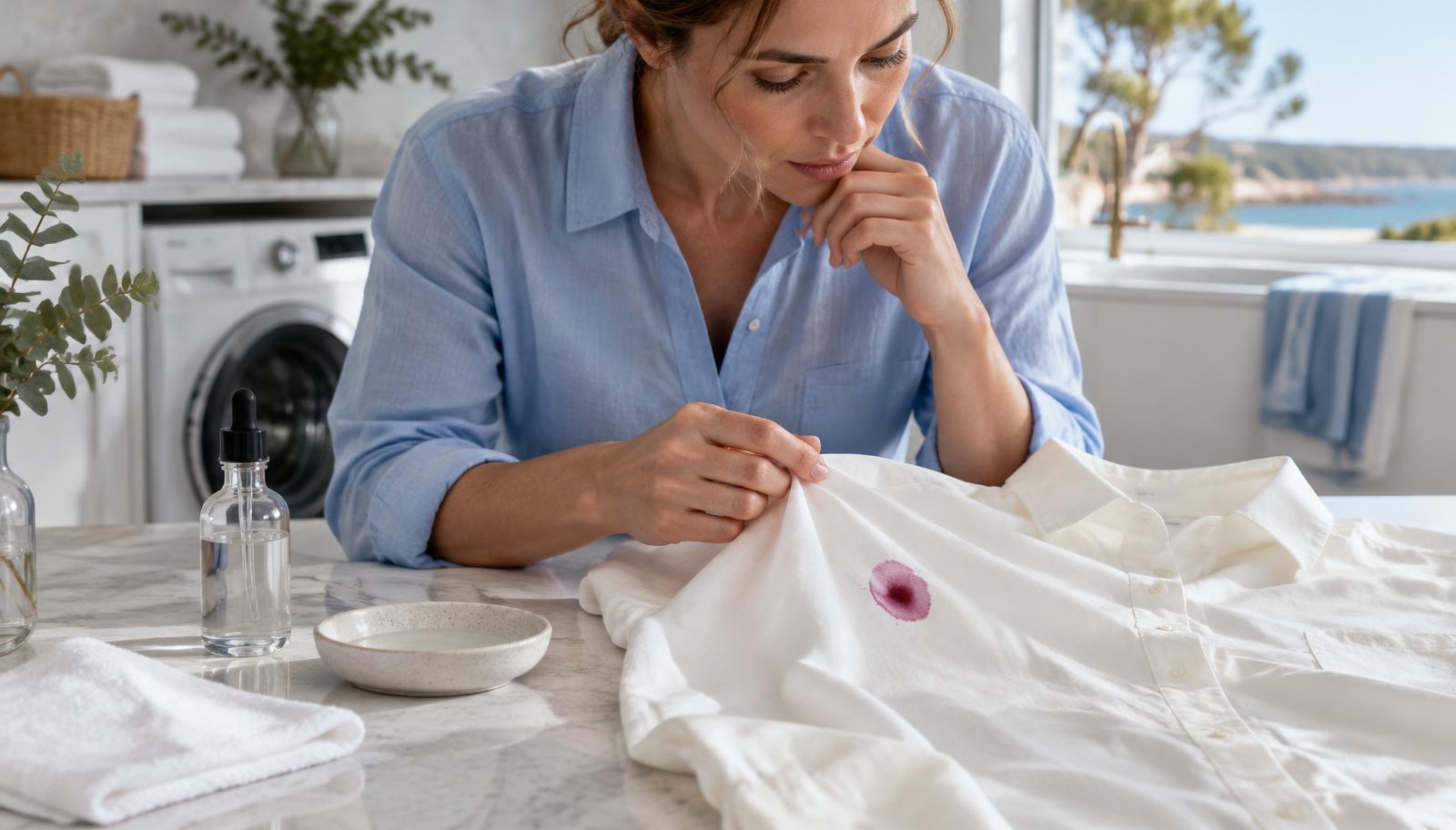
Sunday morning, soft light, and your favourite white linen shirt — the one that looked flawless at that long lunch in the Yarra Valley. You lift it off the hanger and there it is: a faint, tea-coloured ghost on the cuff. You washed it. Twice, actually. It’s still there, quietly mocking you.
Here’s the part nobody tells you: that stain isn’t stubborn because you did something wrong. It’s stubborn because time turned it into chemistry. Left alone, tannins oxidise and darken, oils turn yellow, proteins bond to the fibre — and a single trip through a hot dryer can lock the lot in.
The good news? An “old” stain is rarely a permanent one. Far more often it’s been misdiagnosed — treated with the wrong product, the wrong temperature, or far too much scrubbing. Get the diagnosis right and even that ghost on the cuff has a real chance of disappearing.
Why old stains are so much harder to shift
A fresh spill sits on the surface of the fabric. Blot it, rinse it, and most of it is gone. An old stain has had time to get comfortable. Three things are working against you.
Oxidation
Tannins in wine, coffee and tea react with air and darken to a stubborn brown. Oils oxidise too — which is why a “clean” garment can develop yellow-brown spots weeks after a greasy meal you thought had washed out.
Bonding
As a stain dries, it works its way between the fibres and clings on. Natural fibres such as cotton and linen absorb stains readily, so the longer a mark sits, the deeper it travels.
Heat-setting
Hot water, a tumble dryer or an iron can fix a stain into the fabric — protein stains such as blood and sweat especially. It is the single most common reason a fixable stain becomes a permanent one.
The stain clock
The encouraging part: the middle two stages are still very treatable. The one to avoid at all costs is the last.
Step one: work out what you’re dealing with
Different stains need different treatments — that’s the whole secret. Almost every stain falls into one of four families, and each responds to a different approach. If you can remember what caused it (or guess from the colour, the position and the smell), choose the matching tab.
Protein stains
What works: Rinse with cool water, then soak in an enzyme laundry detergent — the enzymes break the protein down so it can wash away. For stubborn old marks on whites, follow with an oxygen-bleach soak.
Watch out: Heat cooks protein into the fibre, and enzymes can damage silk and wool, which are proteins themselves.
Tannin stains
What works: Flush with cool water, work in a little clear dish liquid with a splash of white vinegar, then soak whites and colourfast items in oxygen bleach. A few drops of glycerine will soften dried-on marks first.
Watch out: Tannins darken with age and heat, so keep the dryer and iron well away until the stain has gone.
Oil and grease stains
What works: Cover the mark with bicarb soda or cornflour for an hour to draw the oil up, brush it off, then work clear dish liquid in with a soft brush and wash at the warmest temperature the label allows.
Watch out: Water alone won’t shift oil, and old oil oxidises into a yellow-brown mark. Treat it before the garment goes through the dryer again.
Dye and pigment stains
What works: For ballpoint ink, dab isopropyl alcohol onto the mark with a white cloth underneath to catch the ink. For turmeric and curry, use dish liquid, then let whites dry in direct sun. For berries, try an oxygen-bleach soak.
Watch out: Alcohol can affect acetate and some dyes, so patch-test first. These stains are the most likely to leave a faint shadow — several gentle rounds beat one aggressive attempt.
Your stain-rescue kit
You don’t need a shelf of specialist products. A small, inexpensive kit — much of it probably already in your pantry — handles the majority of old stains.
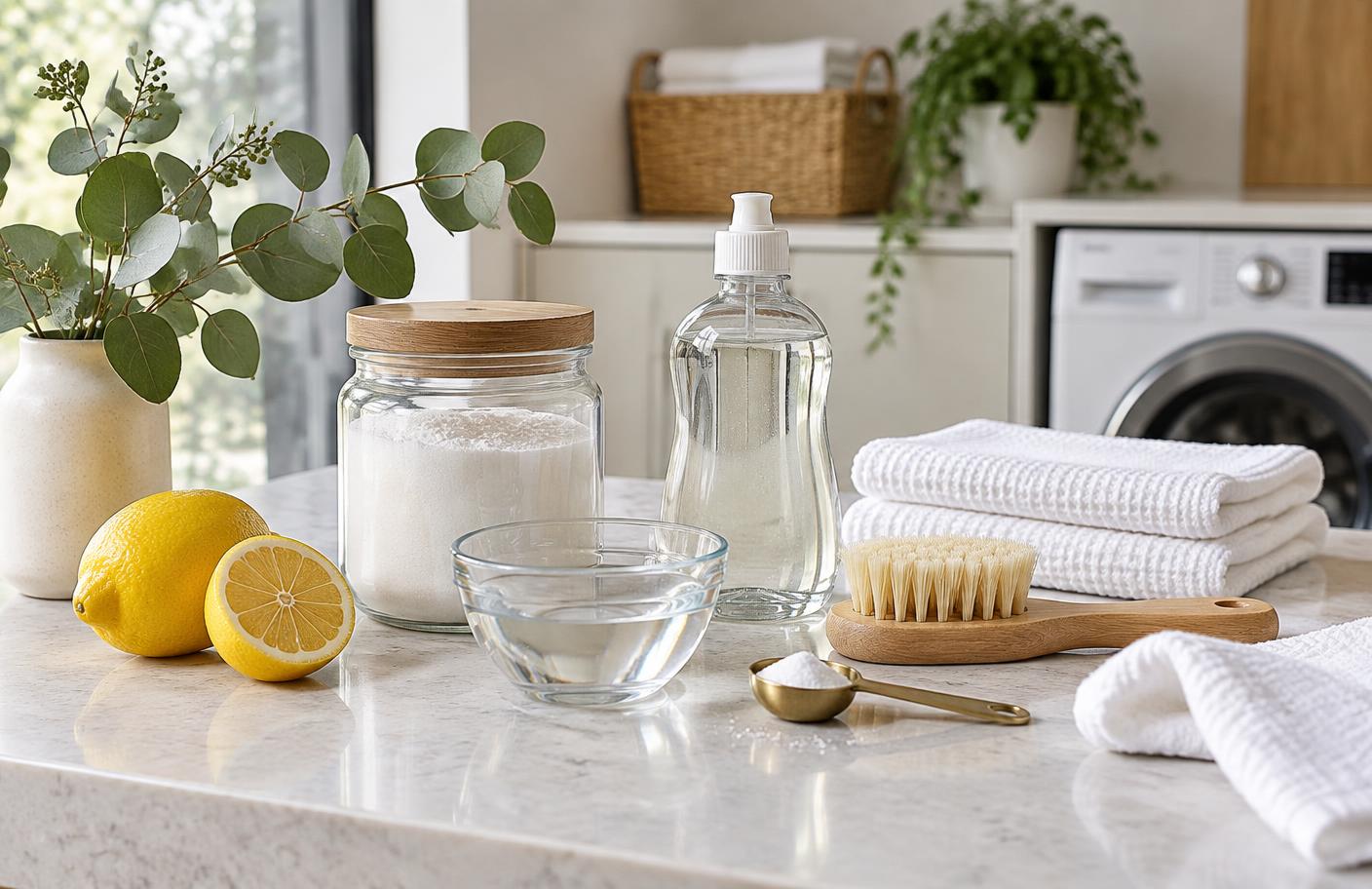
🧴 Clear dish liquid
Cuts through oil and loosens most stains. Choose one without added dye or fragrance so nothing new goes onto the fabric.
🫧 Oxygen bleach
A gentle, sodium-percarbonate brightener for whites and colourfast fabrics. The hero for tannin and sweat marks.
🧪 Enzyme detergent
Breaks down protein stains such as blood, sweat and food. Not for silk or wool.
🍋 White vinegar & lemon
Mild acids for rust, mineral marks and deodorant build-up.
🥄 Bicarb soda & cornflour
Draw oil out of fibres, and make a gentle paste for sweat shadows.
🧽 Soft brush & white cloths
For working treatment in and lifting stains out. Always white, so no dye transfers to your garment.
The method that actually works on old stains
Whatever the stain family, the process is the same. Slow, cool and methodical wins — and the eight steps below work for almost any stain.
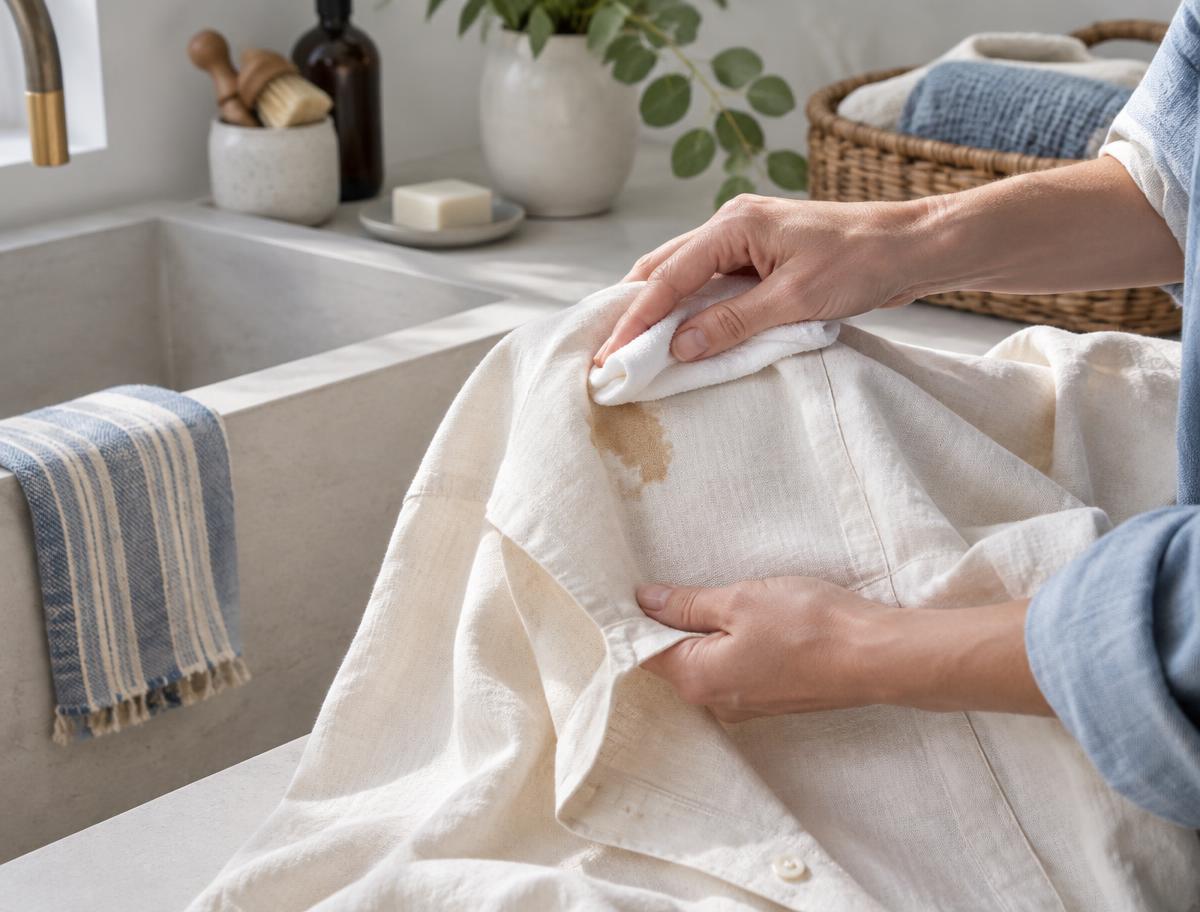
- Read the care label and patch-test. Dab your treatment on a hidden seam or hem, wait a few minutes and check for colour loss. Anything marked dry clean only, or made from silk, wool or cashmere, is best left to a professional.
- Take heat off the table. No hot water, no dryer and no iron until the stain is completely gone. Heat is what turns stubborn into permanent.
- Scrape away dried residue. Lift crusty deposits with the blunt edge of a spoon or a soft brush, working away from the centre so you don’t spread the mark.
- Loosen it before you treat it. Dried stains need rehydrating first. Flush from the back with cool water, or dab on a few drops of glycerine or clear dish liquid and leave it for 15–30 minutes.
- Treat it for what it is. Use the matching approach from the stain families above and the chart below. Work gently with a soft brush or white cloth — dab and press, never scrub.
- Give it time. Spot treatments need 15–30 minutes. For whites and colourfast fabrics, an oxygen-bleach soak of several hours often lifts what a quick dab can’t. Follow the pack directions, as most work best in lukewarm water.
- Rinse from the back. Flushing from the reverse side pushes the stain out the way it came in, rather than driving it deeper.
- Wash, then check before you dry. Launder as the label directs, then inspect the damp garment in natural light. If a shadow remains, repeat — a second or third round often works where the first didn’t. Tumble dry or iron only once it’s gone.
What to use on which stain
| Stain | What works | Avoid |
|---|---|---|
| Red wine | Dish liquid and white vinegar in cool water, then an oxygen-bleach soak. | Hot water and hard scrubbing. |
| Coffee & tea | Oxygen-bleach soak; a dab of diluted white vinegar for lingering marks. | Hot water or the dryer until it’s gone. |
| Sweat yellowing | Oxygen-bleach soak, or a bicarb-and-water paste worked in gently. | Chlorine bleach, which can deepen the yellow. |
| Deodorant build-up | Dab with white vinegar, brush gently, then wash. | Ironing over it. |
| Blood | Cold-water soak with enzyme detergent; 3% hydrogen peroxide on whites. | Hot water, which sets it. |
| Grease, oil & sunscreen | Bicarb or cornflour to draw the oil up, then clear dish liquid. | Water alone; tumble drying. |
| Ballpoint ink | Isopropyl alcohol dabbed on, with a white cloth underneath. | Heat. Not for acetate. |
| Rust | Lemon juice and salt, then sun; or a fabric-safe rust remover. | Chlorine bleach, which fixes rust. |
| Mould & mildew | White vinegar soak, then wash and dry in the sun. | Drying indoors while damp. |
Always patch-test first and follow the care label. Where the label says dry clean only, skip the home remedies entirely.
Fabric first: what’s safe on what
The right treatment on the wrong fabric can do more harm than the stain. Match the method to the fibre before you begin.
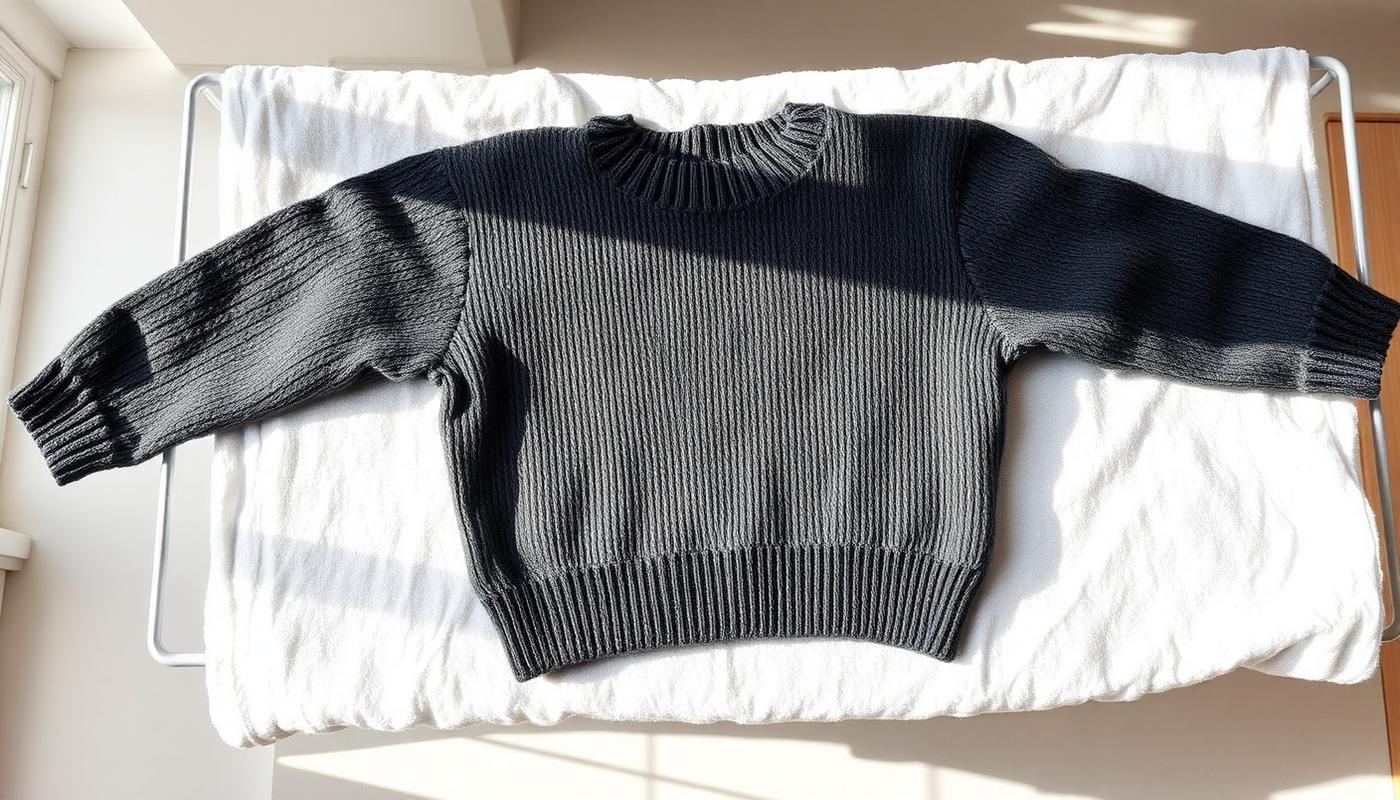
👕 Cotton & linen
The most forgiving. They handle oxygen bleach, enzyme detergent and patient soaking well — just patch-test anything coloured.
Forgiving🧵 Polyester & synthetics
They shrug off water-based stains but hold onto oil like a magnet. Pre-treat greasy marks with dish liquid and keep the heat low.
Pre-treat oils🧶 Wool, cashmere & silk
Skip enzyme detergent, chlorine bleach and long soaks. Spot-clean gently with cool water and a mild detergent, and stop if the fabric looks stressed.
Go carefully🧥 Tailored, beaded & dry-clean only
Suits, formalwear, embellished and structured pieces don’t tolerate home experiments — and mistakes here are expensive.
Leave to a professionalStain myths that make things worse
Heat sets protein and tannin stains for good. Start cool, and only go warmer when the stain type and the label allow.
Aggressive scrubbing frays fibres, spreads the stain and leaves a worn, pale patch that can be more visible than the original mark.
They help in the first minutes, while there’s liquid to absorb. On a dried stain they do very little.
They largely neutralise each other. Use one at a time and rinse in between.
Toothpaste and shaving foam can leave dye, abrasives and residue behind, and rarely lift a genuine stain.
This is exactly how a fixable stain becomes permanent. Check while the garment is damp, and air dry if in doubt.
When it’s time to call a professional
Some stains are worth an at-home attempt. Others are worth protecting the garment from you. Hand it over when:
- The fabric is delicate. Silk, wool, cashmere, leather-trimmed, beaded or anything marked dry clean only.
- It can’t be replaced. A tailored suit, designer piece, wedding outfit or a favourite you’d be genuinely sad to lose.
- The stain is a mystery, or you’ve already had a go and heat has been involved.
- The mark is large or sits on a light, delicate colour where any fading would show.

A good cleaner identifies the stain first, then treats it with spotting agents and solvents matched to it — before the garment is cleaned. It’s a level of precision a bottle of dish liquid can’t match. Two things help: tell them what caused the stain, and hand the garment over before the stain has any more time to settle.
Frequently asked questions
The bottom line: an old stain is a puzzle, not a life sentence
Almost every old stain follows the same rules. Identify it, loosen it, treat it for what it is, and check it before any heat. Patience and the right product will do more than hot water and hard scrubbing ever will.
For the pieces you can’t afford to get wrong — linen tailoring, silk, knitwear, suits and formalwear — Dryz offers pickup and delivery dry cleaning and laundry across Melbourne, so your favourites come back clean, pressed and looking their best.