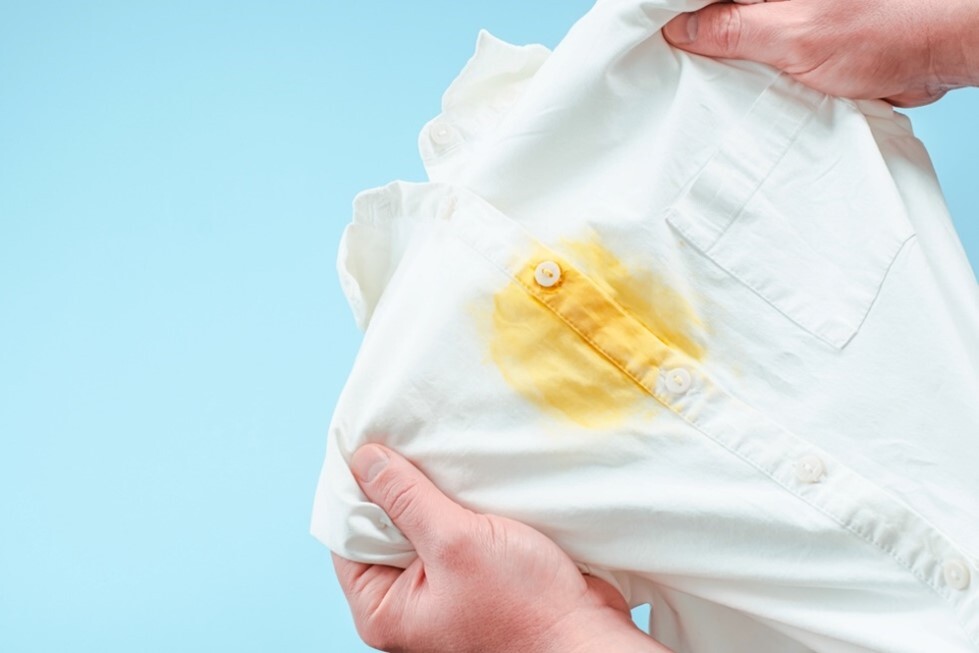
That expensive white shirt, linen dress or favourite summer top can come home looking perfect — then develop a yellow, greasy or orange mark around the collar. Sunscreen is designed to stay on skin through sweat and water, so some of the same ingredients can cling to textile fibres. The good news is that prompt, fabric-appropriate treatment usually gives you a much better chance of saving the garment.
The important detail is that not every sunscreen mark is the same. A greasy patch, a chalky white mineral residue and a yellow-orange mark that appears after washing can have different causes and should not automatically receive the same treatment.

The quick answer
For a fresh greasy mark, a small amount of liquid laundry detergent or a suitable grease-cutting dish soap can help loosen oily residue before washing. For a yellow or orange stain that has developed after laundering, take a more cautious approach: it may involve a reaction between sunscreen filters and minerals in the wash water, so ordinary grease treatment may not solve it.
Why sunscreen stains clothes
Sunscreens can contain oils, emollients and UV filters that are designed to resist water and remain on the skin. Those properties also help residue adhere to fabric. Some chemical UV filters can leave a yellowish mark, while mineral formulas containing zinc oxide or titanium dioxide can leave a pale or chalky residue on darker fabrics.
Identify the stain before treating it
| What you see | Likely issue | Best first move |
|---|---|---|
| Greasy / darker patch | Oils and emollients | Blot or lift excess, then pre-treat with liquid detergent |
| White or chalky mark | Mineral sunscreen residue | Lift excess gently, pre-treat, then wash |
| Yellow mark on light fabric | UV-filter residue | Pre-treat and wash cool; inspect before drying |
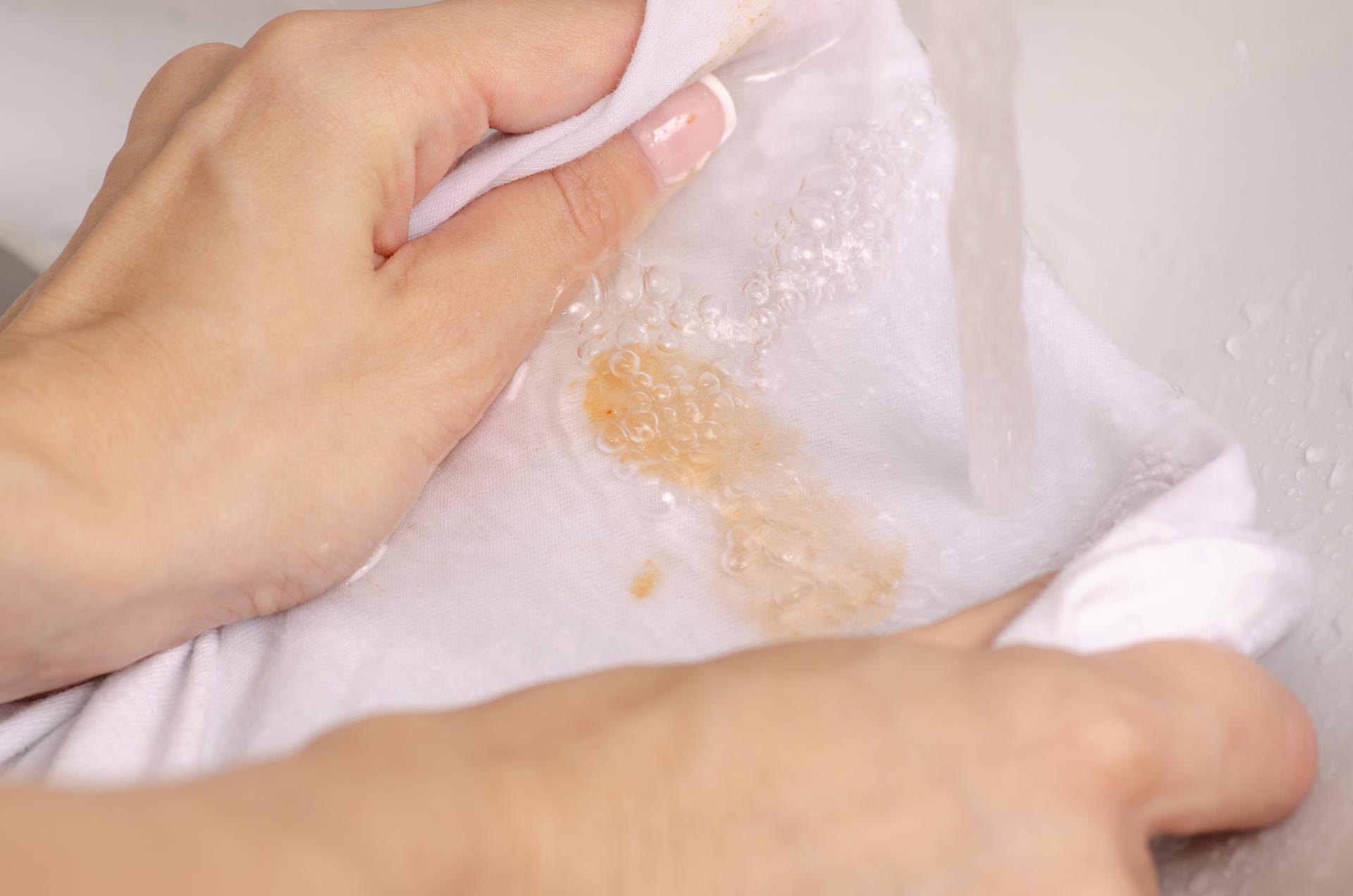
| Orange / rust-coloured mark after washing | Possible filter + mineral reaction | Avoid chlorine bleach; use fabric-safe specialist treatment or professional care |
How to remove a fresh sunscreen stain
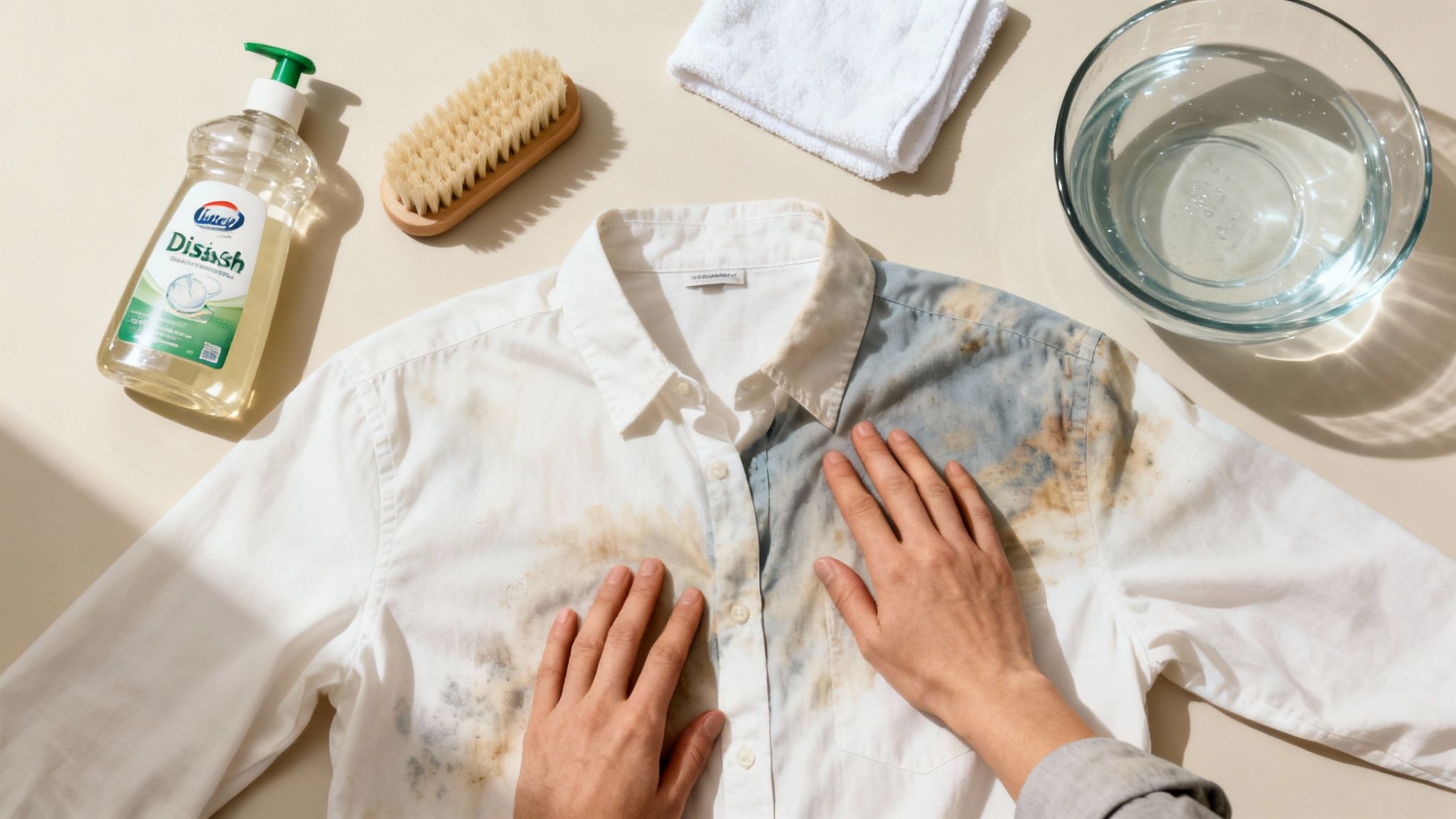
- Check the care label. Delicate, silk, wool, embellished or specialist garments may need a different method.
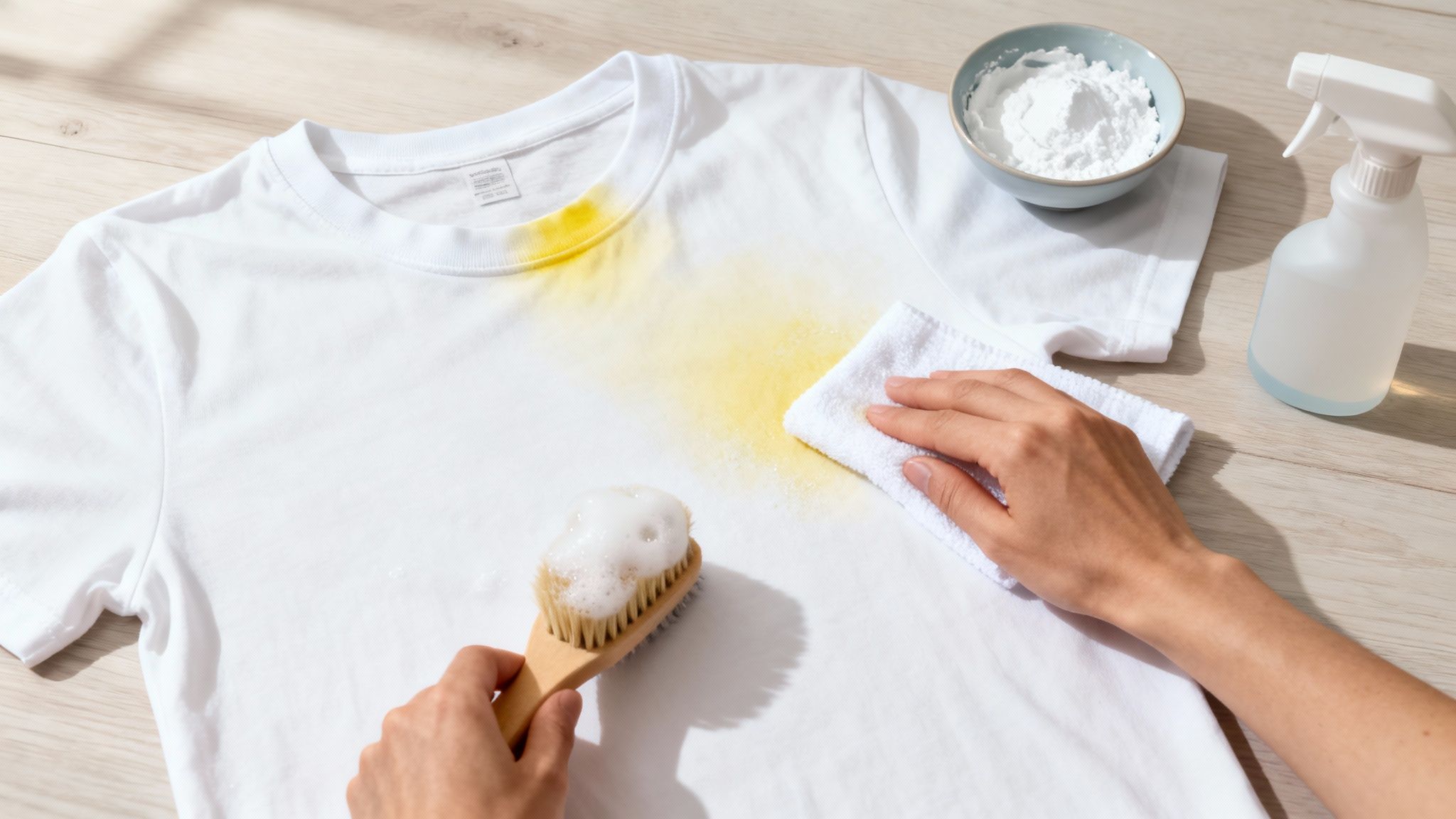
- Remove excess product. If sunscreen is sitting on the surface, gently lift it with a spoon edge or blot with a clean cloth. Do not scrub it deeper into the weave.
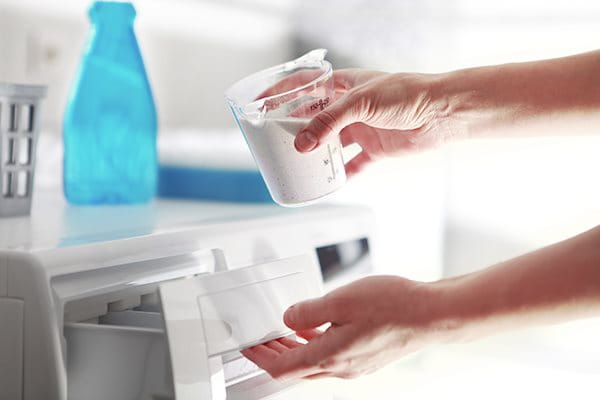
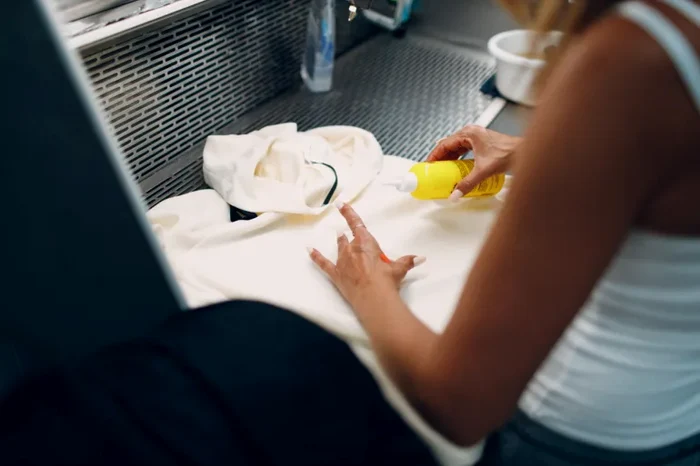
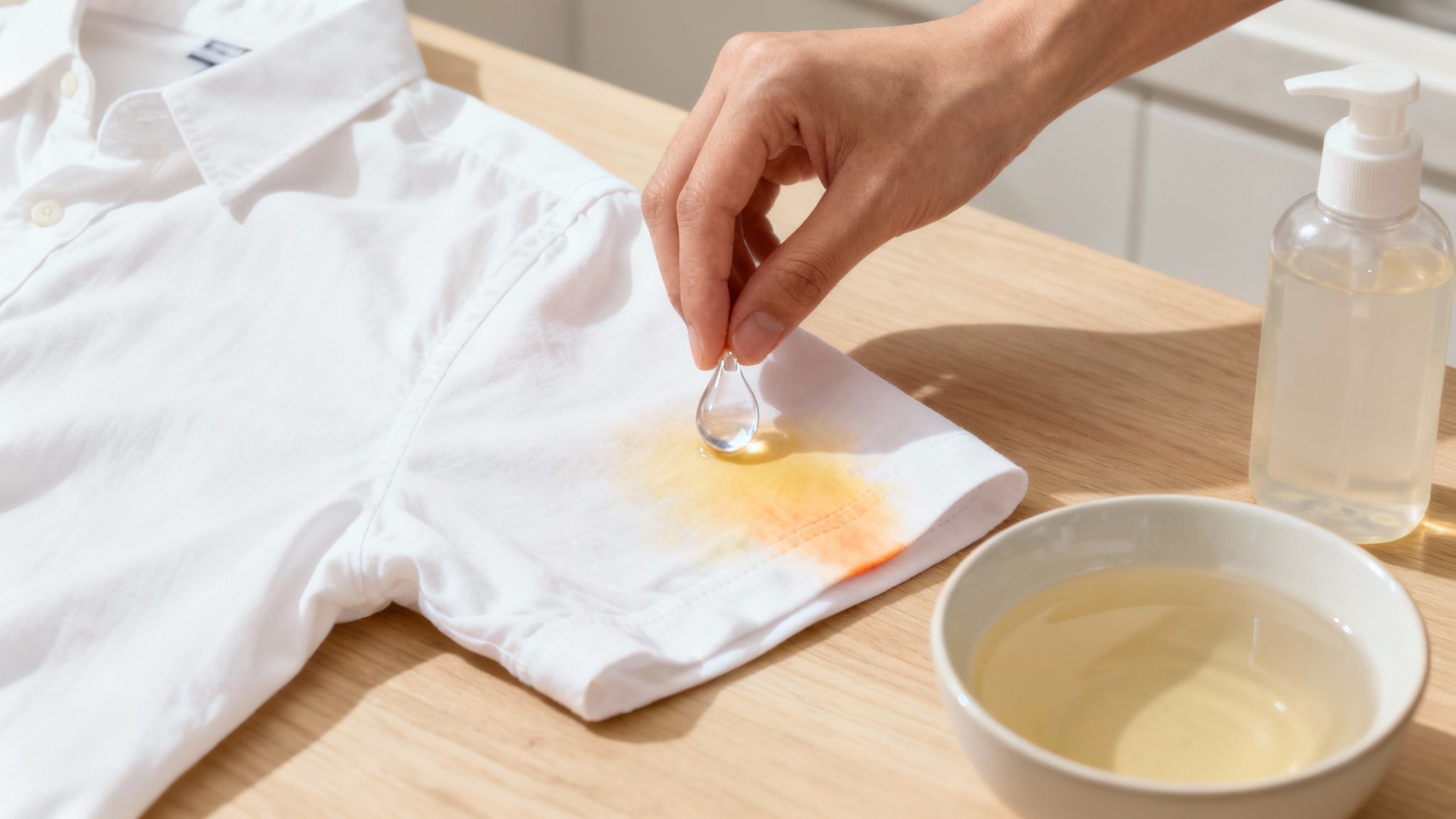
- Pre-treat the mark. Apply a small amount of liquid laundry detergent to the affected area. For sturdy washable fabrics, a small amount of grease-cutting dish soap can also be used cautiously after spot-testing.
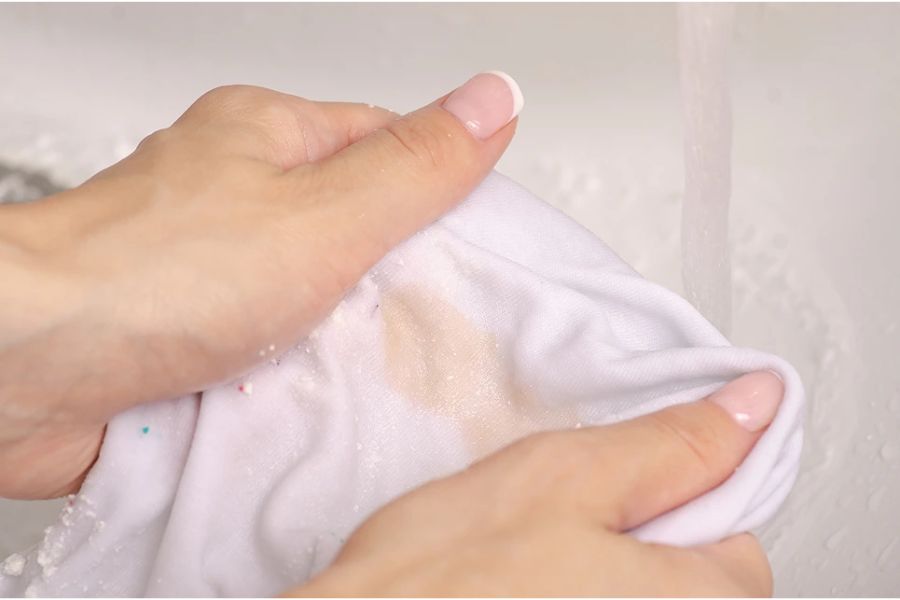
- Rinse and wash. Rinse according to the fabric and wash at the temperature permitted by the care label. Eucerin recommends a cool pre-wash and a 30°C wash with liquid detergent for its sunscreen-stain guidance.
- Inspect before drying. If any yellow, orange or greasy trace remains, treat again rather than putting the garment in a dryer.
What to do about yellow, orange or rust-coloured marks
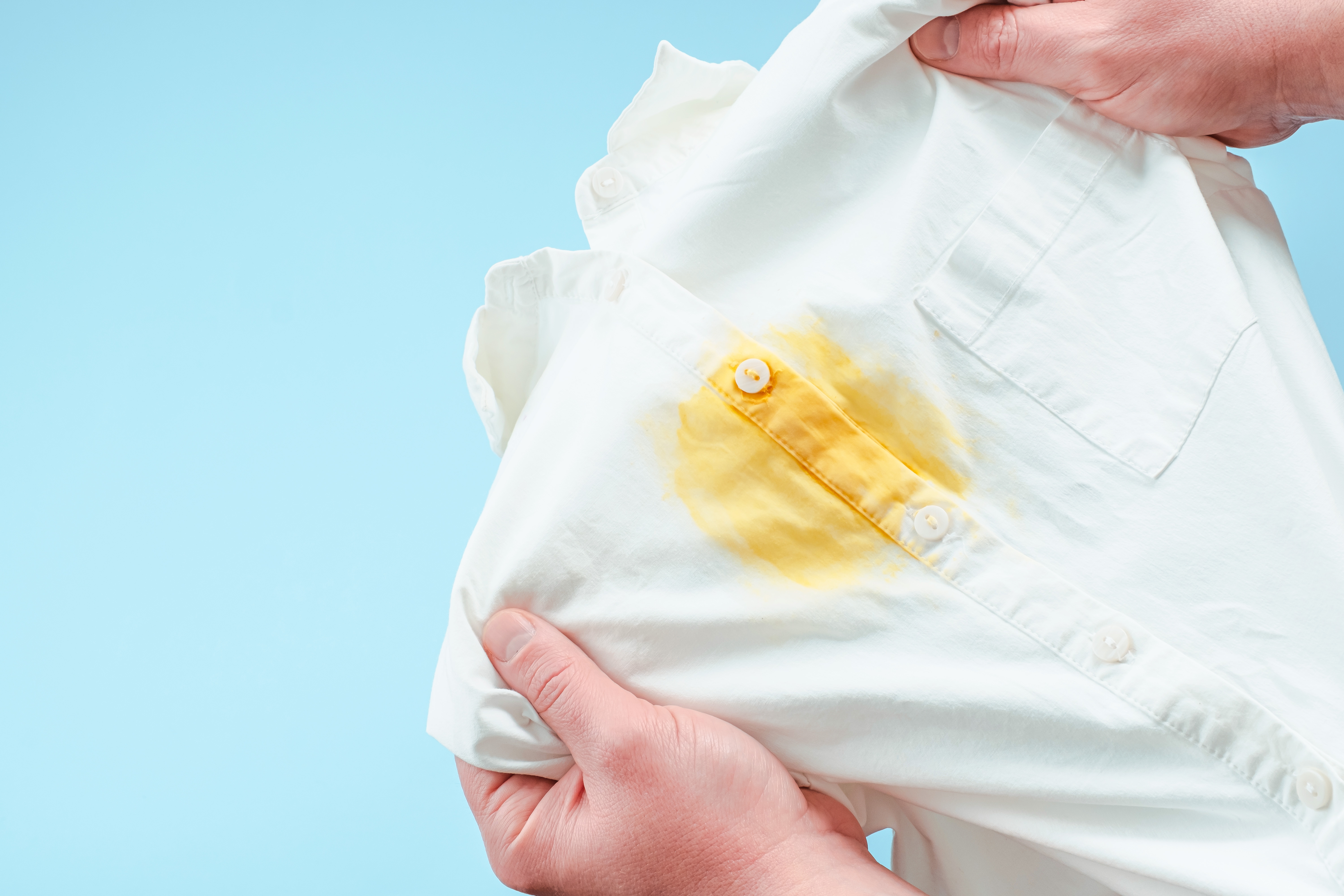
This is where sunscreen stains become more complicated. If a mark becomes distinctly orange or rust-coloured after washing, it may not be ordinary oil residue. Some sunscreens containing avobenzone can react with iron or other minerals in wash water and create stubborn discolouration.
For luxury, tailored or delicate pieces, professional cleaning can be the better choice when the stain has already been washed, the fabric is difficult to wet-clean, or the garment has a special finish. A professional cleaner can assess the fibre and the stain before applying a stronger treatment.
Sunscreen-stain mistakes that make things worse
- Putting the garment straight into a hot wash. Heat can intensify some yellow sunscreen stains.
- Drying before checking. Dryer heat can make an unresolved stain harder to remove.
- Using bleach automatically. Bleaching agents can intensify some sunscreen-related discolouration, particularly orange/rust-like marks.
- Scrubbing aggressively. Friction can spread oily residue and roughen delicate fibres.
- Overloading the machine. Stains need water, detergent and mechanical action to circulate properly.
- Ignoring the care label. A successful stain treatment is still a failure if it damages the garment.
How to prevent sunscreen stains
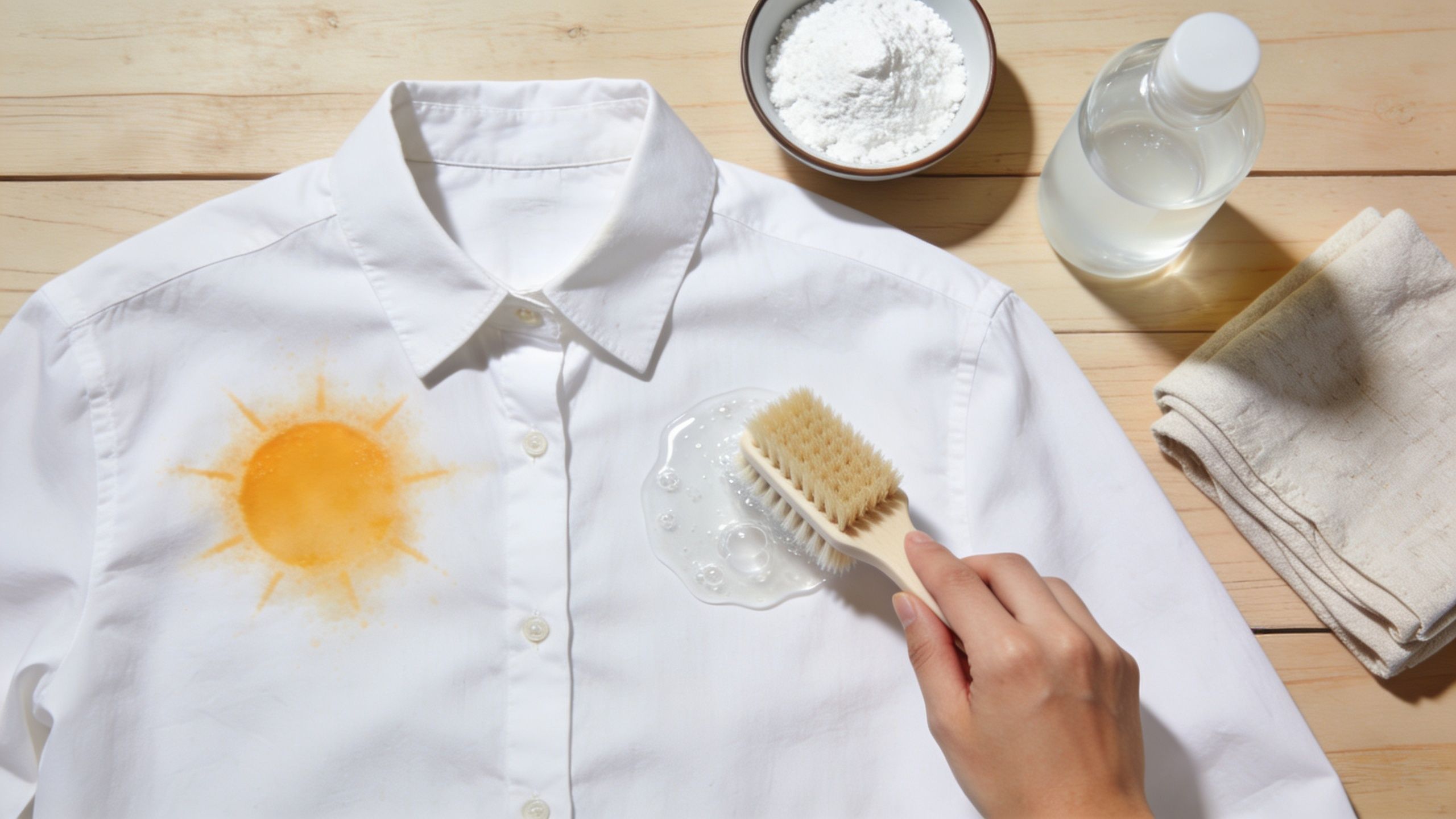
A few simple habits help: let sunscreen absorb before dressing, use only as much product as needed, take extra care around collars and cuffs, and avoid leaving sunscreen-covered clothing compressed in a closed bag for long periods. If a garment is expensive or especially delicate, follow its specific care instructions rather than relying on a generic stain recipe.
Frequently asked questions
Can sunscreen really turn white clothes orange?
Yes. Some sunscreen formulas can leave yellow or orange discolouration, and certain UV-filter residues can react with minerals such as iron in wash water. The effect is more complicated than a simple grease stain.
Should I use hot water on sunscreen stains?
Not as a default. Cooler water is the safer starting point, especially before you know what type of stain you have. Always follow the garment care label.
Can I put a sunscreen-stained shirt in the dryer?
Wait. Inspect the garment after washing and treat again if any mark remains. Heat can make some stains harder to remove.
What about mineral sunscreen?
Mineral formulas containing zinc oxide or titanium dioxide can leave white or chalky residue, especially on dark clothing. Lift excess gently, pre-treat and wash according to the care label.
When should I use a professional cleaner?
Consider professional care for silk, wool, tailored garments, specialty finishes, high-value pieces, or stains that have survived repeated home washing.
The Dryz approach: treat the stain, protect the garment
Sunscreen is essential for skin protection, but the residue does not have to become a permanent part of your wardrobe. The most useful sequence is simple: identify the type of mark, act promptly, pre-treat gently, wash within the garment’s care limits, and inspect before applying heat.
For premium or delicate clothing, the goal is not the most aggressive treatment. It is the most appropriate one — enough to remove the residue without sacrificing the fabric, finish or shape you paid for.